The Open Door Myth: Why a Welcome Can Still Feel Hard to Enter
An open-door welcome can still leave newcomers guessing. Make the place, people and first contribution explicit so joining a local group feels possible.
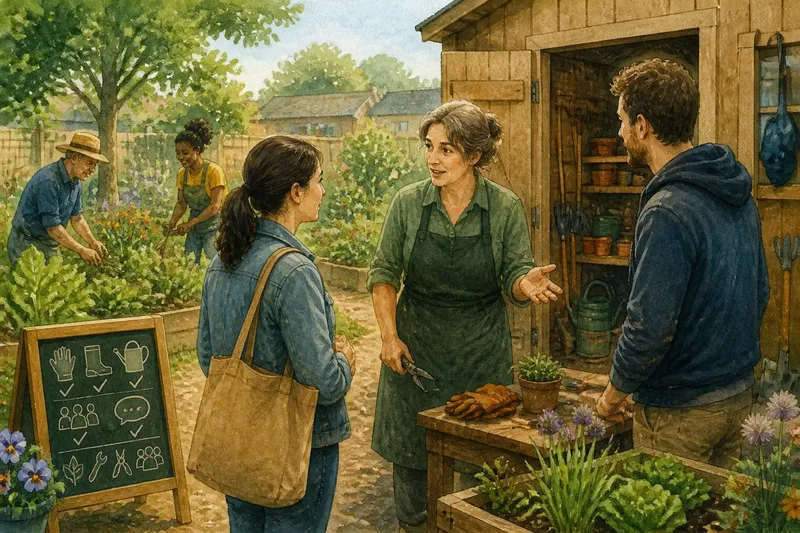
A neighbourhood garden can advertise an open session and still leave a visitor unsure whether they may pick fruit. An open-door welcome works only when people can understand not just how to enter, but what the group’s invitation allows them to do. That is the difference between being admitted and being able to participate.
Many groups solve the practical puzzle of getting people through the door, then stop there. The harder question is what happens once someone is inside: who gets to handle shared resources, make decisions or set the tone? These boundaries are often shaped by habit rather than written rules, which makes them easy for regulars to miss.
What does an open door let someone do?
An invitation can mean several different things: come and watch, join an activity, help with a task, or take part in decisions. Members may treat these as natural stages of involvement. A newcomer may not know whether any of them are permitted.
That uncertainty matters most when an activity touches shared space or resources. At a tool library, for instance, a visitor might be welcome to browse but need to register before borrowing. At a residents’ meeting, a guest might be able to speak but not vote. The group should explain the distinction before a person has to test it in public.
Openness does not require every visitor to receive every role at once. It does require honesty about what is available now, what has conditions, and how someone can ask to take a further part.
Why can informal customs feel like hidden rules?
Regulars learn the local pattern by repetition: which cupboard holds supplies, how work is divided, and whose approval is needed before changing a plan. To them, these details feel obvious. To a newcomer, they can look like a private code.
Some customs are harmless shortcuts; others affect people’s sense of belonging or influence. If only familiar faces suggest agenda items, for example, a meeting may be formally open while its direction remains closed in practice. If a garden task is assigned through an unspoken routine, a visitor may avoid touching anything for fear of causing trouble.
The useful response is not to turn every habit into a rulebook. Make the consequential customs visible, especially those that affect access, responsibility or a person’s voice.
How can a group make its boundaries fair?
Explain the reason for a limit, who it applies to and what route exists for taking part more fully. A clear boundary is easier to trust than an unexplained “That’s not how we do things”.
- Check whether a task needs training. If it involves equipment or a responsibility that requires instruction, explain how to learn it; if it does not, offer the task without making experience an informal entry test.
- Check whether a resource is shared or restricted. If borrowing requires membership or a sign-out, state the condition and how to meet it; if there is no restriction, show visitors how to use the resource responsibly.
- Check who may contribute to decisions. If guests can speak but not vote, say so before discussion begins and explain how membership works; if the decision is open to everyone present, invite contributions plainly.
- Check how new ideas enter the group. If proposals must go through a named process, explain it and give a way to raise one; if anyone can suggest a change, make space for suggestions during the meeting.
- Check whether a role is temporary or ongoing. If a task carries continuing responsibility, describe the commitment and offer a smaller trial contribution where possible; if it is a one-off job, say that no continuing duty follows.
- Check whether a custom excludes people unintentionally. If a routine depends on access, time or knowledge some visitors may not have, offer another route; if it is merely a preference, explain that it can be changed.
These checks help a group distinguish a genuine requirement from a habit that has never been questioned.
What questions should a group settle before inviting people?
Can a visitor join an activity without becoming a member?
Say which activities are open to visitors and whether any conditions apply. If membership is needed for a particular task or resource, explain how to ask about it rather than leaving visitors to infer the rule.
Can guests speak at a meeting?
Explain whether guests may ask questions, propose items or contribute to discussion, and distinguish those rights from any voting rules. Sharing the boundary before a decision is made avoids an awkward surprise.
Who decides whether a new person can take on a role?
Name the person or group responsible and describe the basis for the decision, such as training or an agreed commitment. If there is no formal gatekeeper, say how someone can put themselves forward.
What happens if someone challenges an informal rule?
Give members and visitors a calm way to ask why the custom exists and whether it still serves the group. A question should prompt an explanation or review, not be treated automatically as disrespect.
How does a clear welcome work in practice?
Say a fictional community allotment has an open afternoon, a shared shed and a planning discussion. A visitor asks whether they can prune the fruit trees and vote on where a new bench should go. The group has agreed that anyone may join ordinary gardening tasks after a quick safety explanation, while tree pruning is reserved for people shown how to use the tools. Guests may offer views on plans, but only members vote.
A volunteer explains those boundaries, shows the visitor how to weed a bed, and invites them to share a view about the bench before the discussion. The visitor can take part in the gardening and contribute an opinion, but does not use the pruning tools or cast a vote. The result is a clear choice, not a guess about invisible expectations. The group can also explain how to learn pruning and how to become a member.
That kind of clarity is more than good manners. It lets people decide whether the group’s current offer suits them, while giving them a visible path to deeper involvement if they want it.
How can members spot the difference between openness and habit?
Look at one recurring activity from the perspective of someone who has no history with the group. Ask who can suggest a change, who controls shared materials and whether a person can decline an ongoing role without losing access to other activities.
Then ask a direct question about the boundary: is it needed for safety, fairness or the group’s capacity, or has it simply become familiar? If the reason is sound, explain it. If no one can name a reason, consider trying a different approach and asking participants how it felt.
The phrase “everyone is welcome” carries more weight when a group can also say what welcome means in practice. For an open-door welcome to be real, people need to know not only where they may enter, but where they can contribute, what limits apply and how those limits can change.