A First Gathering, Planned for Easy Arrival
Plan a first gathering with clear arrival details, a useful opening activity and an easy way to enter an ongoing discussion without guessing what to do.
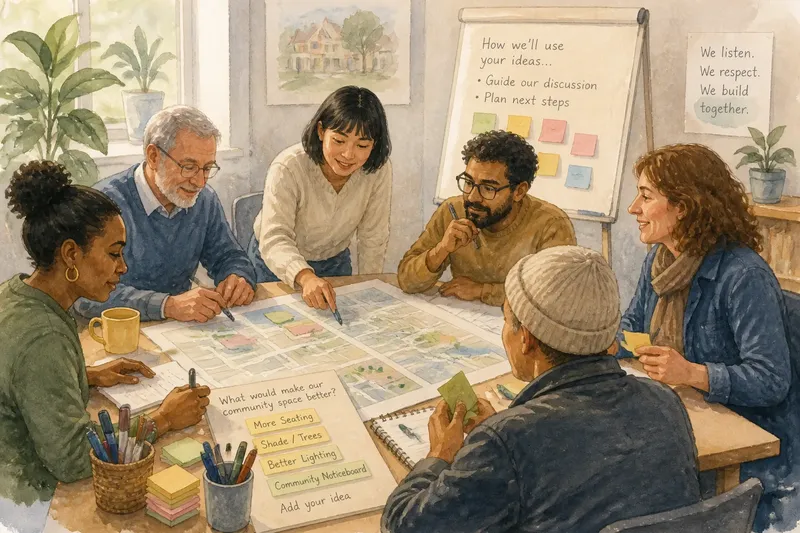
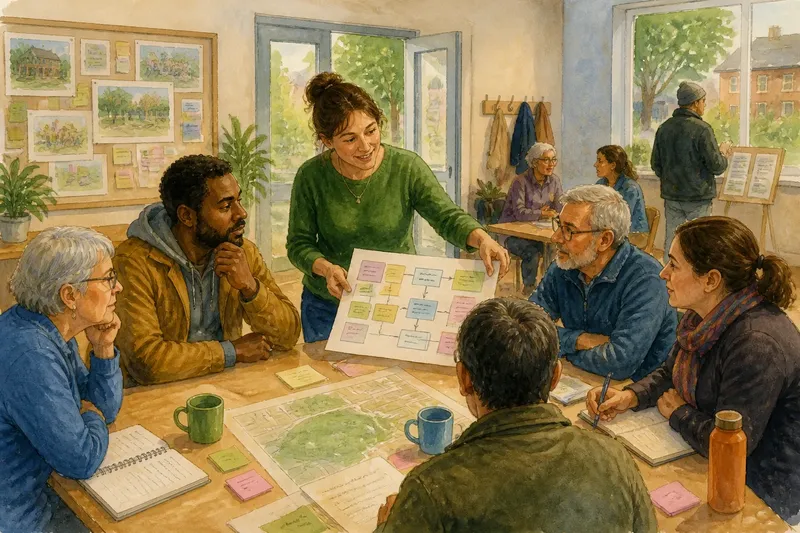
A first gathering works better when its opening gives people something useful to do together, rather than making arrival the main event. For a community meeting, plan a shared task or question that lets guests contribute at their own pace and gives the group a reason to talk.
The opening should fit the gathering’s purpose. A repair group might sort requests by topic; neighbours planning a planting day might mark possible sites on a map. Keep the activity clear enough to begin without a long explanation, and make sure nobody has to disclose personal details to take part.
What should the opening activity accomplish?
A good opening connects people to the work of the gathering. It gives the group a first point of focus, makes different contributions visible and creates a natural bridge into the main discussion.
Choose one modest task rather than several icebreakers. Put the prompt on a sheet of paper or whiteboard, explain what the group will do with the responses, and offer more than one way to contribute: speaking, writing a note or marking a map.
For example, say you are convening neighbours to plan a shared planting day. Put a simple map of the street on the table and ask people to mark spots that might suit pots or planters. If someone prefers not to write, they can point while another person marks the map; the resulting set of suggestions gives the group a concrete starting point for its discussion.
Choose an activity that produces something the group can use next.
How can people contribute without a round of introductions?
Let the subject do the welcoming. A prompt such as “What would make the community garden easier to use?” gives people a shared topic without asking them to perform a personal introduction in front of the room.
Use materials that suit the task: sticky notes for separate ideas, a large sheet for a shared sketch, or index cards when people may want to write before speaking. Explain whether names are needed and what will happen to the notes afterwards. If the discussion concerns a sensitive issue, avoid collecting identifying details unless they are genuinely necessary.
Keep the first contribution small and specific. Instead of asking for a complete plan, invite people to choose between two possible priorities, add one concern to a list or identify a place on a map. The group can build on those contributions as the conversation develops.
How should the group handle ideas and disagreement?
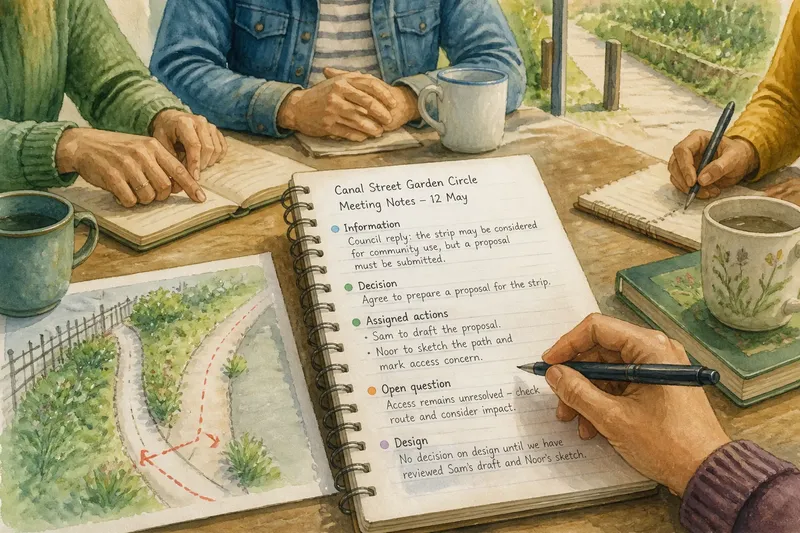
Make the discussion visible. A facilitator can record proposals on a board, distinguish questions from decisions and check that the written notes reflect what people meant. This helps the group return to its reasoning instead of relying on whoever speaks most often to set the direction.
Agree on a simple way to handle competing ideas before choosing among them. The group might first list the options, then name practical constraints such as access, permission or available volunteers. If the choice cannot be settled in the room, record who will find out what and when the group will revisit it.
Imagine a neighbourhood group considering two locations for a noticeboard. Members list the library entrance and the community hall, then identify that permission is still needed at both sites. They decide to ask each venue about installation rules before choosing; the immediate result is a clear next action, not a premature decision.
Which opening activity suits your gathering?
What works for a planning meeting?
Ask people to identify needs, possible locations or priorities on a shared map or sheet. This produces material the group can compare and develop during the meeting.
What works for a practical volunteer session?
Start with a small piece of the work, such as sorting donated materials into agreed categories. The task gives people a shared focus and helps the group see what remains to be done.
What works when opinions may differ?
Collect ideas separately before discussing them together, using cards or sticky notes if helpful. This gives the group a record of options to consider and makes it easier to distinguish disagreement about goals from questions about implementation.
What if the group cannot decide yet?
Record the unresolved question, the information needed and who will seek it. Set a clear point for returning to the issue so it does not disappear between gatherings.
What should you prepare for a useful start?
- Check the purpose: Can you state what the gathering needs to work on? If yes, write a prompt tied to that task; if not, agree the purpose before choosing an activity.
- Check the materials: Are the paper, markers, map or other tools needed for the task available? If yes, place them where everyone can reach them; if not, simplify the activity or bring suitable alternatives.
- Check the ways to contribute: Can people add an idea without speaking to the whole group? If yes, explain the options; if not, add a written or pointing-based option.
- Check privacy: Does the activity ask for names or personal information? If yes, remove that request unless it is necessary and explain how the information will be used; if not, proceed with the prompt as written.
- Check how ideas will be recorded: Is it clear who will capture proposals and questions? If yes, tell the group where the notes will go; if not, assign a recorder or choose a shared surface.
- Check the next action: Can the group use the activity’s result to move forward? If yes, name the follow-up decision; if not, revise the prompt so it produces useful options or information.
Before people begin, explain what the activity is for and how its results will inform the discussion. Keep the explanation brief, then let the group get on with the work.
A first gathering needs an opening that respects both the task and the people taking part. For a first gathering, make the shared activity visible, offer more than one way to contribute and record what the group decides to do next; that gives newcomers and regulars a common place to begin.